Say what? Dark matter? LIGO is designed to detect gravitational waves, right, not dark matter. Well not exactly.
First, LIGO detects a lot of signals which it considers noise because they interfere with the type of signal it attempts to detect. But we must remember that noise is made of signals generated by a number different physical phenomena, the sources of which often unknown. I have discussed a bit about what such noise can reveal (the data it contains). Today however, I want to discuss of the actual signals that were detected by LIGO and most recently by the LIGO-VIRGO collaboration.
The signals that were detected are as what theory would expect from gravitational waves to look like (although the validity of the signals is being disputed). As interpreted through general relativity, the signals can’t be anything other than gravitational waves. The fact is that the observations fit so well with theoretical predictions that very few people feel there is any need to even look for alternative explanations. Alternative explanations of the observations are not considered, even when such explanations are not only consistent with observations but in some case consistent with a wider spectrum of physical phenomena than does general relativity. I will examine here one such alternative explanation and derive a prediction that distinguishes it from general relativity.
Before we do so, we need to look at QGD’s explanation of dark matter.
Dark Matter
Quantum-geometry dynamics is derived from a minimum set of axioms necessary to describe dynamic systems. One of its axioms is that there is only one fundamental particle of matter, the  , and everything else, including particles we consider elementary like photons, electrons and neutrinos is composed of
  . In its initial state, the universe contained only free which were distributed uniformly throughout space (itself composed of discrete units we call
  ). Over its evolution of the universe, some combined to form photons and neutrinos (note that the isotropy of the cosmic microwave background radiation, CMBR for short, is more consistent with an initial isotropic state of the universe than it is with a singularity). Following the formation of the CMBR, particles formed that were progressively more massive, which led to the formation of more massive structures, eventually giving birth to stars, galaxies and large scale structures. But most would still be free today and account for the effect we attribute to dark matter; dark matter being the gravitational effect of the mass of contained in large regions of space.
 never decay and transmute into any other particle, because of that, and because their momentum is orders of magnitude smaller than that of even the least energetic photon, they have and will always escape any efforts to directly detect them as particles. travel at only one speed which is fundamental and is equal to
  . Note that the constancy of the speed of light is not an axiom of QGD but rather a consequence of its axioms (see Why can’t anything move faster than the speed of light?).
Large Scale Effect
On large scale, the total mass of over large regions of space is such that it exceeds the mass of visible matter. The effect of the gravitational interaction between dark matter and visible matter has been observed which made possible the estimation of the amount of dark matter in the universe.
Small Scale Effect
When the of even a small region of space are polarized (their motion is made to go in a same general direction), if the density of polarized is large enough, their constitute a field which momentum can be detected. Polarized can interact with and be absorbed by material structures, imparting those structures with their momentum (for a detailed explanation see sections on the laws of momentum in Introduction to Quantum-Geometry Dynamics). Essentially, according to QGD, polarized are the fundamental constituents of magnetic fields.
Therefore, interact gravitationally at a distance (see New Equation for Gravity as Derived from QGD’s Axiom Set for detailed discussion) and locally through absorption or emission (see Preonics (the foundation of optics), imparting or carrying momentum in the process.
What does it have to do with the LIGO detections?
The GW170817 event has electromagnetic counterparts. One in particular, was the detection of a gamma ray burst which was detected about two seconds after the GW170817 signal. This tells us that the signal that caused the GW170817 detection travelled at the speed of light. QGD predicts that only three types of particles can move at the fundamental speed ; , photons and neutrinos. Since neutrinos have not been detected and since photons would not have affected the detectors, the only possibility that is consistent with QGD is that the signal, the wave, was composed of . Note that in the context of QGD, waves are distribution curves of discrete particles is discrete space. They are not continuous as is assumed by most physics theories.
Also important to keep in mind is that according to QGD, there is no such thing as pure energy. The mass energy relation is a direct consequence of the axioms of QGD, but the relation is not one of equivalence but one of proportionality. This means that energy is an intrinsic property of matter, therefore it cannot exist in a pure form. For a quick explanation of the relation between mass and energy see Mass, Energy and Momentum or better yet An Axiomatic Approach to Physics.
Free can become polarized when they interact with an object which itself is polarized. Basically, a polarized object is one whose components particles move in the same direction. Polarized objects absorb and emit which intersect with them along the direction of rotation through a mechanism described here.
Whether the polarized object is as small as an electron or as large as a neutron star, a black hole or even a super massive black hole, but the mechanism by which the polarized object interacts with free is governed by the same laws of momentum. What varies is the size and density of the polarized preonic field, which in turn determines how much momentum it carries and can impart at a distance.
If the shape of the object in relative to its rotation plane is spherical, the amount of reflected or emitted is constant, hence undetectable. But binary systems form a non-spherical structure which causes the fluctuations in the polarization of the preonic field. The flow of is modulated by the orbital motion the objects of the binary system creating a wave of which frequency is equal to time is takes to accomplish half and orbit, and the amplitude proportional to the speed of the objects and inversely proportional to the distance between them. The shape of what we could call a preonic wave would be exactly that of the predicted gravitational waves. Most importantly, the preonic wave would interact with the LIGO detectors, imparting their momentum to them and inducing a signal that LIGO which form would be indistinguishable from gravitational waves.
How to distinguish between gravitational waves from preonic waves?
If gravitational interferometer cannot distinguish between gravitational and preonic waves, how can we know which of gravitational waves or preonic waves LIGO-VIRGO detected?
A preonic wave is periodic fluctuations of the polarized preonic field. If, as QGD predicts, magnetic fields are composed of polarized , then the momentum of a magnetic field is proportional to the preonic density and a preonic wave will affect the magnetic moment of a reference magnet. A gravitational wave will not affect the moment of a reference magnet. So in order to distinguish between a gravitational wave and a preonic wave, all we need to do is measure fluctuations in the magnetic moment of a reference magnet. If such fluctuations are detected and correlated to a wave detected by LIGO-VIRGO interferometers, then the wave would not be gravitational but preonic.
LIGO detections and its consequences for QGD
QGD forbids the very existence of gravitational waves. So the detection of gravitational waves would falsify QGD. However, if the experiment suggested above is performed and fluctuations in the magnetic moment of a reference magnet are found. Then, though the prediction of the gravitational waves would not be falsified (only their detection would be), it would provide support for QGD prediction of preonic waves.
The significance of the LIGO detections would in no way be diminished if the waves are found to be preonic. Quite the opposite since it would help answer questions about the nature of dark matter, magnetic fields and the evolution of the universe. Most importantly, it would force us to question our best theories of gravity. The discovery may even deserve a second Nobel prize for the detection of elusive dark matter.

 and
and  , the magnitude of the gravitational force is calculated using Newton’s equation for gravity
 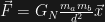 where
where  and
and  are the masses of the bodies, then substituted in the equation for Newton’s second law of motion; the familiar
  where
where  is the acceleration of
  that gravity becomes repulsive when bodies separated by distances such that
  . That is, there is a threshold distance
  (from observations) beyond which gravity becomes repulsive and increases proportionally to the square of the distance. The effect of repulsive gravity as described by QGD is consistent with the observed expansion of the universe which is currently attributed to
  greater than the magnitude of the attractive gravitational force in close proximity to the binary system that caused the event. Such gravitational effect is astronomically greater than the signal detected by LIGO in 2015. In fact, the repulsive force would be enough to tear our galaxy apart from the gravitational tidal force and accelerate it to speed approaching the speed of light. And the repulsive force between the Earth and the recently observed GW170104 event, presumed to be a twice the distance, would be four times as great. The reason our galaxy (and others) is not torn apart is that the distribution of matter in the universe is nearly homogenous so that the repulsive gravitational forces from distant massive systems acting on each individual particle that compose our galaxy are nearly cancelled out by the repulsions from systems in the opposite directions; resulting in a weak net gravitational effect. So, if the
  where
where  is one of a total of
  massive structures forming the universe. So, LIGO may be thought as measuring the fluctuations of the gravitational tidal effect of the universe on its instruments.