In part 1 of this series we have shown that the results from quantum entanglement experiments using Mach-Zehnder Interferometer setups can be explained in a locally realistic way. In fact, we can see that quantum entanglement is not required to explain the observations and that result from such experiments, in themselves, do not in actuality support the existence of quantum entanglement. In the present article, we will show quantum-geometry dynamics provides an explanation of the results of experiments based on the Stern-Gerlach experiment , which according to Wikipedia “has become a paradigm of quantum measurement,” that does not violate the principle of locality.
Prerequisites for the Present Article
Readers who are not familiar with the Stern-Gerlach experiments should read the excellent introduction provided here before reading on. Also, readers are not familiar with the quantum-geometry dynamics should minimally have read the article titled Quantum-Geometry Dynamics in a Nutshell or, for an in depth understanding read Introduction to Quantum-Geometry Dynamics (from here on referred to as ITQGD).
The Experiment

Figure 1
In the above setup (figure 1), the red beam represents an electron beam and the green arrows represent magnetic preons; which according to QGD, are polarized  which compose all magnetic fields (see relevant section of ITQGD for a detailed explanation). The first filter allows only up-spin electrons to go through (50% of the electrons). The second filter (filter 3) is rotated 180° relative to filter 1 so that only down-spin electrons are allowed through. Since only up-spin electrons exit from filter 1 to reach filter 3, the above setup filters out both up-spin and down-spin (relative to filter 1) electrons so that 0% of electrons from the source exit the setup.
In the setup shown in figure 2, a second filter has been added between filter 1 and filter 3 which is at 90° relative to the direction of filter 1.

Figure 2
As we have seen above, only up-spin electrons exit filter 1 (50% of the electrons). These up-spin electrons go through filter 2, which filters out electrons down-spin electron relative to filter 2. The electrons not filtered out by filter (25% of electrons) enter filter 3. Since only up-spin electrons relative to filter 1 will exit filter 2, classical physics predicts that since the electrons exiting filter 2 are up-spin relative to filter 1 the, as in the setup in figure 1, they should be filtered out by filter 3 so that no electrons should exit the setup. However, observations show that 12.5% of the electrons from the source exit the setup.
Quantum mechanics attributes the results of this experiment to the phenomenon of quantum entanglement. According to quantum mechanics, detecting the orientation of the spin of one electron of a pair of entangled electrons will change the orientation of the spin of the other instantly regardless of the distance that separates them. In other words, even if two entangled electrons were separated by a distance of the order of magnitude of the universe, measuring this property for one electron of an entangled pair must instant affect this property in the other. This phenomenon which Einstein called spooky action at a distance is thought to refute the principle of locality.
Going back to the results from the setup shown in figure 2, the quantum mechanical explanation requires that all electrons are entangled at the source so that only pairs of entangled electrons enter the apparatus. Then detecting the spin of one electron of an entangled pair instantly changes the spin of the other. So according to quantum mechanics, the electrons passing through the setup do not behave classically because the act of detecting their spins in filter 2 (filter and detector are synonymous) changes the orientation of their spin so that up-spin electrons relative to filter 1 become down-spin electrons, hence are allowed through filter 3.
There are a number of inconsistencies in the above explanation. First, we know that only one of each pair of entangled electrons is allowed through filter 1. It follows that if the electrons existing filter 1 and entering filter 2 are not entangled pairs so that detecting down-spin electrons in filter 2 should not change the orientation of the spin of the up-spin electrons passing through filter 2 so that the electrons exiting filter 2 should be filtered out by filter 3. Observation shows this to be incorrect which leads to the assumption that the electrons exiting filter 1 are also entangled pairs. We may chose to ignore or explain away the inconsistencies of the quantum mechanical explanation but doing so creates an even graver inconsistency.
Going back to the setup shown in figure 1, if the electrons that enter filter 1 are entangled pairs then detecting a down-spin electron should change the other electron of a pair in such a way that, to be consistent with the explanation of the figure 2 setup, 50% of electrons should through the setup 1 and not the 0% observed. Therefore, electrons appear to behave classically when going through the apparatus of setup 1 but quantum mechanically when passing through the apparatus of setup 2.
QGD’s Interpretation of the Stern-Gerlach Experiment
In order to interpret the above results using quantum-geometry dynamics, we have to remember that QGD proposes that are the only fundamental particles of matter. As a direct consequence, all other particles are composites particles, hence must have structure.
We must also keep in mind QGD’s description of the electromagnetic effect and magnetic fields; the latter being composed of unbound which are polarized as result of their interactions with the bound component of electrons (or any other so-called charged particle).
Note: The reader may be interested in a recent experiment conducted by a group of physicists at the National Institute of Physics in Italy which results are in strong agreement with QGD’s description of the electromagnetic effect and the magnetic field. Their results also imply that electrons have structure and that gravity and the electromagnetic effect are related as described by QGD (see relevant sections of ITQGD). Also, see this article for distinct experiment which results support QGD’s prediction that electrons have structure.
According to QGD, electrons and positrons belong to the same class of particles with the only distinction between them being their dynamic structure. Electrons are made of a series of pairs of bounded whose trajectories are within either open or closed regions of quantum-geometrical space. As we will see, the experimental results from the Stern-Gerlach experiments are consistent with electrons having closed structure.
Figure 3 shows representations of an electron and a positron, the trajectories of the component of one may be thought as the mirror image of the trajectories of the component of the other. This allows QGD to predict that an electron moving through a magnetic field must deflected towards the same direction as a positron moving in opposite direction. Note that this implies that positrons, the anti-particle of the electron, are made of the same matter as electrons and that electron-positron annihilation is due a dynamical mechanism (see ITQGD for a detailed discussion).


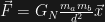
Figure 4 illustrates the interaction between an electron and the electromagnetic field generated by the plates of a spin filter. As per the laws of motion described in here, the momentum of an electron can only change by integer multiple of its mass (the number of it contains). We also know from the mechanics of particle formation that for to become bound, they must move in the same direction, that is, if they must interact over a long enough quantum-geometrical distance. Therefore the magnetic from  can bound with the component represented by the blue arrows and the magnetic from
  can bound with the component vectors moving along the periphery represented by the red arrows. Since the “red” interact with a larger volume of quantum-geometrical space than the “blue” , for a given density of the magnetic field they will interact with a greater number of magnetic . If the difference between the sum of the momentums of the interacting magnetic from and the sum of the momentums of interacting magnetic from is equal or greater to
  , the mass of the electron, a number magnetic from and such that
  where
where  ,
,  and
and  are the sum momentum of the interaction preons(+) from and respectively. It follows that
  where
where  and
and  are respectively the momentum vectors before and after the absorption of polarized . The change in speed of the electron, here away from , is given by
 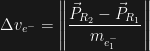 .
.


Note that Figure 4 shows the special case when the electron is oriented so that is perpendicular to the magnetic field. More generally, and will be proportional to the projection of orbital region on the planes perpendicular to the magnetic field. But for the purpose of this article, we only need to consider the orientation of the electrons relative to planes coincident with the filters magnetic plates.
Following our description we find that an electron moving through a magnetic field will absorb polarized which will impart it their momentum and will change the direction and magnitude of its momentum vector.
We will see how the very property of an electron which the experiments attempts to measure (here the spin) is changed, not via spooky action at a distance, but by the filter itself following the absorption of magnetic that form the magnetic fields. Therefore, the property of the electron is changed before it enters the next filter. So though a filter answers the question as to whether the spin of an electron is up or down relative to the orientation of the filter, if the electron has structure, the question is incomplete since it ignores that the other directional components of the spin which are essential to fully describe it. The binary up or down question also ignores that the changes an electron will undergo as it moves through a magnetic field. So the answer to the binary question provides an incomplete description of the spin property of the electron. We will see that when describing completely the electron and how it changes we can explain the results of any Stern-Gerlach without having to resort to the phenomenon of quantum entanglement.
But before we continue, we will use the simplified representations of electrons shown in figure 5 (the symbols on the right sides of the equality signs).

 As you see, the figures take into account both the spatial orientations of electrons and the general orientation of the moving on the periphery, represented by the red arrow and which corresponds to orientations of the bound that interact most with either the top or bottom electromagnetic fields. The orientation of those determines to the spin of the electron represented by the red vector in the in simplified representations.
We can now precisely describe what happens to electrons going through each of the three filters of the setup illustrated in figure 2.
Figure 6 shows electrons entering filter 1 from the left as indicated by the cameo on the bottom right section. The top right coordinate axes provide the relative orientation of the filter.


Given a number of electrons with all possible orientations relative to the magnetic fields, it is easy to see that 50% of them are oriented in such a way they will absorb magnetic coming primarily from the bottom magnetic field resulting in a change of momentum towards the up direction. The other 50% will interact mainly magnetic coming from the top which will result in changes of their momentum towards the bottom. But as they do so, their momentum vectors, hence their spin changes so that the component will come tend to align with the trajectories of the magnetic (this corresponds to the magnetic lines of force).
In figure 7, we changed to perspective to show how the electrons are split into up-spin and down-spin relative to the filter 2. As they move through the magnetic fields, the electrons align with the line of force.


Figure 8 shows the observed results of experiments that use the setup shown in figure 2.


The orientations of electrons which, passing through filter 2, hence the orientation of the motion of its component which determines the orientation of the magnetic spin, change as the result of their interaction with the magnetic field as described earlier. Though all electrons exiting filter 2 will be up-spin relative to filter 2, they will have one of two possible orientations relative to filter 3 (see figures 9 and 10). Electrons oriented as shown in figure 9 will be up-spin relative to filter 3 (12.5% of the electron from the source) and those oriented as shown in figure 9 will be up-spin relative to filter 3 (12.5% of the electrons from the source). The down-spin electrons relative to filter 3 will be filtered out so that 12.5% of the electrons from the source will exit the apparatus.


The observed results from quantum entanglement experiments using Stern-Gerlach are in agreement with predictions that follow naturally from QGD’s axioms set. The reason electrons from the source exit the setup shown in figure 2 while none exit the figure 1 setup can be attributed to the changes in the orientation of the electrons itself undergo when passing through filter 2.


Conclusions
We have explained in a locally realistic way the results of the Stern-Gerlash experiments. According to QGD, the spins of electrons do not change because of quantum entanglement, but as a result of their interactions with the magnetic fields. Therefore, quantum entanglement experiments such as the one we have described here do not reveal some weird counterintuitive behaviour of nature, but rather support the prediction that electrons have structure and that magnetic fields are made of polarized unbound .
Implications
In an earlier article, we have shown here that the principle of quantum state superposition is unnecessary to explain the observed results from double-slit experiments. And in the present series of articles, we have shown that from the axiom set of QGD we can provide locally realistic explanations of the experiments which most strongly support quantum entanglement. It follows that the universe, even at its most fundamental scale, is strictly causal and deterministic.
If QGD is correct in that quantum entanglement and quantum state superposition are non-physical mathematical consequences of quantum mechanics, then no technology that exploits these phenomena can be realized.
Note: The present article summarizes a more detailed discussions which will be found in the next edition of Introduction to Quantum-Geometry Dynamics.