The theoretical interpretations of observations of the behaviour of light indicate that it possess the mutually exclusive properties of the wave and the particle; a paradox that is known as the particle/wave duality. That light may have wave properties was hypothesized following observations of how light behaves in diffraction experiments, particularly in interference experiments such as the double-slit experiment where light produces diffraction and interference patterns that appear similar with diffraction patterns produced from observable waves in nature (such as waves on the surface of liquid). The similarities between the diffraction patterns are thought to imply that light may fundamentally be a wave.
Yet, some experiments, particularly those using a Talbot-Lau interferometer, have shown that material structures such as protons, neutrons, atoms, and even very large molecules display wavelike behaviour, that is, they display optical properties in the form of diffraction patterns. That calls the question: Does the wavelike behavior of light imply that it is fundamentally a wave? In order to answer that question, we need to understand what a wave is.
First, it is important to note that waves which we have observed and which inspired the wave model of light actually emerges from the motion of discrete structures; the motion of molecules of air or the molecules of water, for example. Thus the mathematical representation we call wave function models the motion and distribution of discrete particles that constitute a medium and describes the absorption and transfer of perturbation energy to other molecules of the medium, which create the waves which will eventually restore the state of equilibrium that existed prior to the perturbation (as when a stone is thrown in a pond, causing the displacement of water molecules).
Thus waves emerge from the interactions between discrete particles. That brings the questions: Is there really a wave-particle duality? Considering the above the answer is obviously “no.” Waves can be understood as the change in distribution in space of particles under the influence of a perturbation (kinetic energy) (and gravity for liquids submitted to Earth’s attraction). The wave properties are emergent, thus they cannot be fundamental.
Consider this: When studied under a powerful microscope, waves disappear leaving nothing but the motion of molecules. So would it make sense that we attribute to water molecules the fundamental property of the wave? Of course not! So why do we attribute the fundamental wave property to light? A property cannot at the same time be fundamental and emergent. And if we’re going to use the wave model for light, then isn’t not possible that its wavelike behavior is also emergent? Couldn’t waves emerge from the discrete interactions between photons and, for instance, the material slits are cut into to create the familiar diffraction or interference patterns? QGD’s answer to the question is unequivocally “yes.”
We will show that the diffraction and refractions patterns of particles, including that of photons, are actually scattering patterns that can be fully explained in terms of gravitational interactions between photons and the experimental apparatus. Therefore, diffraction experiments with larger particles dot not show that they possess wave properties similar to that of light, but the opposite. That is, light shares the discrete structures of larger particles so that diffraction patterns of light, too, emerge from the discrete gravitational interactions between photons and the blocking material in which slits are cut. In other words, the diffraction and refraction patterns can be fully explained without invoking any intrinsic or fundamental wave properties. As a consequence, it can be argued that light is singularly corpuscular and the diffraction patterns and interference patterns are simply scattering patterns of discrete particles caused by gravitational interactions and the structure of quantum-geometrical space.
For those who haven’t read the book or earlier blogs, QGD proposes that all that is not space must be made of preons(+). That includes all particles we currently believe to be elementary, even photons. QGD also proposes that energy is an intrinsic property of preons(+) which is their kinetic energy. The energy of a particle or material structure is then equal to the number of preons(+) it contains (which also corresponds to its mass  ) multiplied by
  , the intrinsic energy of the preon(+), which gives the familiar
  .
.
Note that unlike Einstein’s interpretation, E=mc is not an equivalence equation, but a proportionality equation. In QGD, energy is an intrinsic property of matter and so cannot exist without it. So energy can never be converted into matter nor matter be converted into energy. Thus nuclear reactions are not events in which matter is converted into energy, but ones in which bound particles are separated and carry with them their intrinsic momentums. The mechanisms of nuclear reactions is explained in greater detail in Introduction to Quantum-Geometry Dynamics, but for those who have no time to read it, consider the following image.
Imagine two massive spheres in space, in absence of gravity, each equal in mass and moving at high speed but attached by a string forcing them to orbit each other. Imagine that the system consisting of orbiting spheres, taken as a whole, is at rest. Then, the momentum of the system is equal to zero. Now, imagine that we suddenly cut the string. Taken as a whole, the energy of the system does not change, but the spheres now move freely. The energy of each sphere hasn’t changed, but the sphere being free, they carry with them their momentum. Now, can we conclude that part of the mass of the spheres changed into energy? No, since they number of preons(+) that compose them is unchanged. And since we know that energy is an intrinsic property of preons(+), the energy of the sphere hasn’t changed either. This in essence is what happens in a nuclear reaction. Photons and other particles composing the nuclear material which are bounded into a structure become free as a result of a nuclear reaction and carry with them their momentum (in the special cases of photons and neutrinos, the momentum is equal to the energy). The number of preons(+) of a system is unchanged by nuclear reactions, so mass and energy do not change either. The only difference is that previously bounded particles are now free to interact with other systems, imparting them with their momentums.
Now back to our subject; the singularity of light.
When distance is very short, as when light passes through a physical medium or comes very close to it, applying the QGD motion equation shows that the interaction between photons and the matter of the apparatus produces diffraction patterns identical to those observed in diffraction experiments. Consider the simple apparatus below in which light from a single source passes near a massive structure (the blue circle) and hits the screen represented here by the black solid line.

Using the equations for gravitational interaction and motion through quantum-geometrical space (discrete space) found in Introduction to Quantum-Geometry Dynamics, we find that the deflection angle  is given by
  . where
  is the form of the QGD equation for gravity that applies at the fundamental scale (see Introduction to Quantum-Geometry Dynamics) .
 From this, we see that the angle of deflection will depend upon the mass of the photon, that is, the number of
  it contains.
We also know from the laws of motion described in Introduction to Quantum-Geometry Dynamics that though the magnitude of the momentum vector of a photon does not change, its direction does as per the equation above. But we have seen that any change of direction implies a change the momentum along that direction and that only change that are integer multiples of the mass of the object is allowed. That is, if  where
where  .
.
It follows that if photons are emitted from a single source, as in our apparatus, angles of deflection such at  will be forbidden .
The allowed deflection and forbidden region will contribute to produce diffraction patterns as shown in the following image and the fringe patterns we normally associate with wave interference.

As you can see, the diffraction patterns are produced using only the particle model of light, producing he patterns we attribute to a wave-like property. The width and spacing between the fringes will be a function of the mass of the photons and their distance from the massive structure. More massive photons will, according to the equation above, have larger the range of forbidden deflection angles and narrower fringes. Note that this result is only possible if space is quantum-geometrical as defined by QGD. Note that if  were the corner of a structure, then light would be bent around it in a manner consistent with our model and which behavior of light has been observed.
It is interesting to note that when we apply the same equation to photons passing through slits or double slits, they will invariably produce the diffractions patterns that have been observed and which we have come to associate with waves. The main difference with our above example is that in slit experiments, light passes through the massive structure and the photon course deflection is the net resultant of the gravitational interaction between the photon and the massive structure, which will depend on both shake and density of the material the slit(s) is(are) cut into. Applied to different shapes, the interaction equation predicts patterns consistent with observations. Below are some examples of observation consistent with the singularly corpuscular model of light.

diffraction pattern for single slit square aperture

diffraction pattern for single slit round aperture
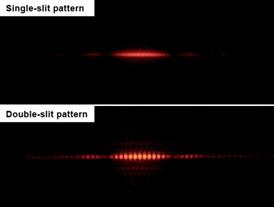
single and double slit patterns
Refraction
When applied to photons moving through material, such as the glass of a prism, the QGD equations describe exactly the deviation of photons from their course. The magnitude of the deviation is, according to QGD, directly proportional to photon’s mass. So more massive photons, which are correctly associated with higher energy (bluer photons) will be deviated more than their lighter counterparts. The interaction with the material, in a prism or any other form, is the resultant of the gravitational interactions between the photon and material it passes through. The deviation will thus be towards the more massive part of the structure. For a prism, that will be the base (see image below).
Refraction is discussed in more detail in part 2 of this series.

The Notions of Frequency and Wavelength in the Light of Quantum-Geometry Dynamics
As we have seen, the patterns of diffraction and refraction of light are completely described by a model of light in which it is singularly corpuscular. If light, as QGD proposes, light is singularly corpuscular, that is, all wave-like behaviour are emergent, then we must reinterpret our observations of optical phenomena and revise, if not abandon altogether, the application of the concepts of frequency and wavelength to light.
In part 2 of this series of articles on QGD optics, we will discuss refraction of light. Part 3 will be on reflection of light and the photoelectric effect.

 is fundamental and invariable. The momentum vector is denoted by
  the momentum is
  . We have shown that the momentum vector of a structure is given by
  and its speed by
  . From these equations, it follows that the maximum possible speed of an object
 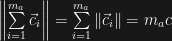 and
and  . Note here that
  corresponds to the energy of
  and
and  where
where  is the speed at which a clock
  for ticks of a clock, produced over a given reference distance
  is proportional to the transversal speed of component
 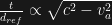 . It is thus easy to see that as the speed at which a clock travels is increased, the rate at which it produces ticks slows down and becomes
  are the number of ticks counted by two identical clocks counted travelling respectively at speeds
  over the same distance
  .
. . However, it is important to note that the two predictions of the QGD and the special relativity equations cannot be directly compared. The speed in the relativist equation is the relative speed of the clocks while the QGD equation makes uses the distinct and intrinsic speed of the clocks.
 then
then  . We have also shown that gravity affects the orientation of the component
  of structure so that
  and
and  and since
  in order to predict the effect of gravity on the rates of clocks, all we need to do is substitute the appropriate value in
 .
. since it takes into account both the effect of the speed and gravity on a clock. Thus, if QGD is correct, the predictions of SR and GR are approximations of particular solutions of the QGD equation.