Tuesday, November 6, 2012

Mass, Energy and Momentum

In this article we will show how quantum-geometry dynamics explains mass, energy, momentum.

As discussed in earlier articles, quantum-geometry dynamics proposes that there be only two fundamental particles: The preon(-), which dimensionalizes space, and the preon(+), the fundamental particle of matter. What distinguishes quantum-geometry dynamics from dominant theories of fundamental physics, collectively known as the standard model, is that all properties of elementary particles are intrinsic. Essentially, this means that no additional particles and their properties are necessary to explain interactions not only at the fundamental scale but at all scales.

According to QGD, every particle or material structure is made of preons(+). That includes, without exception, all particles we currently consider to be elementary. Electrons, positrons, neutrinos and even photons are thus composed of preons(+).

Preons(+) possess two intrinsic properties. The first is that they are strictly kinetic. Preons(+) are always in motion. Their speed is constant, hence their kinetic energy is constant and equal to c. The speed of preons(+) is constant whether they are free or bound within a composite particle or structure. The constancy of the speed of preons(+) is a direct consequence of the quantum-geometrical structure of space. Preons(+) move by leaping from preons(-) to preons(-). The preonic leap is fundamental unit of distance. Since there is no smaller distance than the preonic leap, there is no faster motion than that of a preon(+).

The second intrinsic property of preons(+) is that they interact with each other through p-gravity, which is an attractive force acting between them. The p-gravity interaction between two preons(+) is the fundamental unit of p-gravity or \displaystyle {{g}^{+}} .

Mass

According the QGD model, mass is an intrinsic property of matter. Since preons(+) are the fundamental particle of matter, their mass must be the fundamental unit of mass. It follows that the mass of an object should be understood as being equal to the number of preons(+) it contains. So when we write that {{m}_{a}}is the mass of a particle a we mean that it contains m number of preons(+).

Energy

Like mass, energy is an intrinsic property of preon(+). The fundamental unit of energy corresponds to the kinetic energy of the preon(+) and is equal to its mass times its speed, which is equal to c , that is {{E}_{{{p}^{\left\langle + \right\rangle }}}}={{m}_{{{p}^{\left\langle + \right\rangle }}}}c or, since {{m}_{{{p}^{\left\langle + \right\rangle }}}}=1 , we have {{E}_{{{p}^{\left\langle + \right\rangle }}}}=c. So the kinetic energy of a preon(+) is mathematically equivalent to its speed.

The same formula applies to composite particles or structures. So if a is a particle or structure with mass {{m}_{a}} , then its energy must correspond to the added energies of the preons(+) that compose it. In mathematical terms the relationship between energy and mass is expressed by the formula \displaystyle {{E}_{a}}={{m}_{a}}c; the number of preons(+) multiplied by the energy of each preon(+).

Thus quantum-geometry dynamics provides a simple and elegant explanation of the relationship between the mass of a body and its energy. It is important to note though QGD’s equation appears to be similar to Einstein’s mass-energy equivalence equation, it differs in important ways.

First, {{E}_{a}}={{m}_{a}}c is not an equivalence relation between mass and energy. Mass corresponds to the number of preons(+) of a body and energy corresponds to product of mass by the fundamental energy of the preon(+). So the QGD equation expresses a proportionality relation between mass and energy, not an equivalence relation. So according to the QGD model, mass can never be converted to energy, nor energy be converted to mass. Mass and energy are two intrinsic but distinct properties of preons(+).

At first glance this may appear to contradict observations. For instance, nuclear reactions result in a certain amount of mass being transformed into energy. What the QGD model suggests is that during a nuclear reaction, mass is not transformed into energy, but rather, bound particles become free from the structures they were bound to and carry with them their momentum. There is no conversion of mass into energy, but only the release of particles having momentum. We will see in the next section how kinetic energy is the only kind of energy that exists.

Momentum

That mass and energy are intrinsic properties of preons(+) implies that unless a composite particle or massive structure loses or acquires preons(+), its mass and energy remains constant regardless of its speed. This is in disagreement with dominant physics theories which define the energy of an object has the sum of its intrinsic energy, also known as its energy at rest, and its kinetic energy or momentum; a relation that is expressed by the equation E=m{{c}^{2}}+mv where m{{c}^{2}} is the energy of the body at rest, c the speed of light, and mv,the product of the its mass by its speed v,its kinetic energy or momentum.

The accepted definition of the energy of a body is logically correct. The reasoning behind it is simple. In order to accelerate an object, one needs to impart energy to it. Thus it makes perfect sense that the accelerated object carries this energy, which we call kinetic energy, with it. So the assumption that the total energy of body must be equal to the energy it had prior to acceleration plus the kinetic energy that is imparted to it is perfectly logical. However, we will show here that using the axioms of QGD we arrive at different descriptions and explanations which, though in disagreement with dominant physics theories, are consistent with observations.

According to QGD, there is only one kind of energy known as kinetic energy or momentum.

As explained earlier, the speed of a preon(+) is constant, hence its momentum is constant and equal to c. It follows that the total energy of a particle or massive structure must be equal to the sum energy of its constituents. This is described by the formula {{E}_{a}}={{m}_{a}}c.

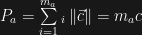
From this point we will use vectors to represent momentum and direction. We will, for example, associate the vector \vec{c} to the momentum of a preon(+) so that c=\left\| {\vec{c}} \right\| . The energy of a preon(+) is thus the magnitude of its momentum vector. This distinction allows us to define {{E}_{a}} and {{P}_{a}}, respectively the energy and momentum of a particle a in the following way.

\displaystyle {{E}_{a}}=\sum\limits_{i=1}^{{{m}_{a}}}{\left\| {{{\vec{c}}}_{i}} \right\|}={{m}_{a}}c

{{P}_{a}}=\left\| \sum\limits_{i=1}^{{{m}_{a}}}{{{{\vec{c}}}_{i}}} \right\|

To illustrate this, let’s consider the simple particle made of two bound preons(+) as shown in the following figure 1.

Here the particle, which we’ll denote a , is composed of two preons(+), p_{1}^{\left\langle + \right\rangle } andp_{2}^{\left\langle + \right\rangle }, bound by gravitational interaction (the resulting effect of p-gravity and n-gravity). The purple arrows represent their trajectories in quantum-geometrical space. The yellow vectors represent their momentum at a certain point before taking into account the bounding force. This magnitude of this vector is equal to c.

In this example, the interaction between the preons(+) is strong enough to deviate them from what would be their free trajectories, which would coincide with their momentum vector.

If the composite particle in our example is not subjected to any other force, then {{E}_{a}}=\sum\limits_{i=1}^{{{m}_{a}}}{\left\| {{{\vec{c}}}_{i}} \right\|}={{m}_{a}}c=2c, and its momentum is {{P}_{a}}=\left\| \sum\limits_{i=1}^{{{m}_{a}}}{{{{\vec{c}}}_{i}}} \right\|=\left\| {{{\vec{c}}}_{1}}+{{{\vec{c}}}_{2}} \right\|=0. The zero value indicates that particle is at rest relative to quantum-geometrical space.

However, if a interacts with a massive structure b (see figure 2), then the trajectories of the preons(+) of p_{1}^{\left\langle + \right\rangle } and p_{2}^{\left\langle + \right\rangle } will change and affect the momentum of a. We see that {{E}_{a}}=2c but that {{P}_{a}}=\left\| {{{\vec{c}}}_{1}}+{{{\vec{c}}}_{2}} \right\|=2v where v is the speed of the particle.

This example shows how the energy of a particle does not change as a function of its speed. The momentum of a particle changes but is already taken into account in the formula {{E}_{a}}={{m}_{a}}c. The same applies to material structures at all scales.

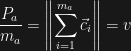
We should address here the issue of the maximum possible speed of massive structure. From what we have seen so far, the speed of any structure is \displaystyle \frac{{{P}_{a}}}{{{m}_{a}}}=\left\| \sum\limits_{i=1}^{{{m}_{a}}}{{{{\vec{c}}}_{i}}} \right\|=v . Since \displaystyle \max \left\| \sum\limits_{i=1}^{{{m}_{a}}}{{{{\vec{c}}}_{i}}} \right\|=\sum\limits_{i=1}^{{{m}_{a}}}{_{i}}\left\| {\vec{c}} \right\| , the maximum speed of a particle or structure is achieved when the momentum of a particle is equal to its energy or {{P}_{a}}={{E}_{a}} . This is evidently the case for light, but that shouldn’t be confused with current idea that light is pure energy. The energy of a photon is still that of its component preons(+). The same applies to a structure when the trajectories of all its component preons(+)are parallel and oriented in the same direction. In such case we have {{P}_{a}}=\sum\limits_{i=1}^{{{m}_{a}}}{_{i}}\left\| {\vec{c}} \right\|={{m}_{a}}c so that {{v}_{a}}=\frac{{{P}_{a}}}{{{m}_{a}}}=\frac{{{m}_{a}}c}{{{m}_{a}}}=c . Particles for which energy and momentum are always equal include photons and neutrinos but theoretically any structure regardless of its mass can achieve c if it is submitted to a strong enough force.
Slowing Down of Clocks

The conservation of the speed of preons(+) implies that any increase in the speed of a structure translates in a reduction of the transversal speeds of the component preons(+), hence a decrease in the speeds of the component substructures. In other words, all internal motion must slow down as v increases. This means that all internal motion of any structure will slow down to a stop when v=c. The slowing down of internal motion explains why clocks slow down without the necessity of introducing the mechanism of time dilation. Thus, QGD provides a non-relativistic explanation of the slowing down of clocks due to an increase in speed or gravitation.

Therefore, the slowing down of clocks (or any internal motion of a particle or system) is consistent with QGD’s assumption that time is not physical property of reality, but a purely relational concept allowing us to compare events to cyclic periodic systems; in other words, clocks. It is clocks that slow down, not time.

Note that this explains observations showing that fast muons decay at a much slower rate than slow muons. Whatever internal process cause muons to decay will slow as its speed increases.

This is explained in detail in the article The Slowing Down of Clocks as Explained by QGD (see link).


Calculating Direction of a Bound Preon(+) and Structures

When a preon(+), denoted {{p}^{\left\langle + \right\rangle }} , is subjected to an interaction with an object a , expressed by force vector \overset{\leftrightarrow }{\mathop{G}}\,\left( {{p}^{\left\langle + \right\rangle }};a \right)  , its direction changes while its speed, hence its energy remains constant and equal to \left\| {\vec{c}} \right\| . The momentum of a preon(+) is conserved under change in direction.

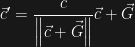
If \vec{c} is the momentum vector of a preon(+) and \vec{c}' is its momentum vector resulting from a change in direction cause by attractive force, then \left\| {\vec{c}} \right\|=\left\| \vec{c}' \right\|=c . The momentum is conserved in accordance to the formula \displaystyle \vec{c}'=\frac{c}{\left\| \vec{c}+\vec{G} \right\|}\vec{c}+\vec{G} for a single preon(+) influenced by a single force \vec{G} .

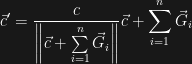
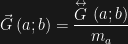
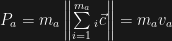
When a preon(+) is subjected to n forces we have \displaystyle \vec{c}'=\frac{c}{\left\| \vec{c}+\sum\limits_{i=1}^{n}{{{{\vec{G}}}_{i}}} \right\|}\vec{c}+\sum\limits_{i=1}^{n}{{{{\vec{G}}}_{i}}} . Also, because the momentum vector of a particle or massive structure is the resultant of the sum of the momentum vectors of all its components, that is {{P}_{a}}={{m}_{a}}\left\| \sum\limits_{i=1}^{{{m}_{a}}}{_{i}}\vec{c} \right\|={{m}_{a}}{{v}_{a}} , and we can threat the particle as a whole when it is subjected to a force. Then using the momentum vector \displaystyle {{\vec{P}}_{a}} for the particle a can have \displaystyle {{\vec{P}}_{a}}'={{\vec{P}}_{a}}+\vec{G}\left( a;b \right)  where \displaystyle \vec{G}\left( a;b \right)  is the gravitational interaction between a and b and \displaystyle \vec{G}\left( a;b \right)=\frac{\overset{\leftrightarrow }{\mathop{G}}\,\left( a;b \right)}{{{m}_{a}}} .
In conclusion, change in speed and the corresponding change in momentum of a composite particle or massive structure is caused by discrete changes in the trajectories of their component preons(+). The kinetic energy of a composite particle or structure is thus a directional component of the total energy along the axis of motion. As such, the kinetic energy of body is already included in the intrinsic energy of an object, itself the sum of the kinetic energy of its preons(+). At the most fundamental scale, the preonic scale, since preons(+) are kinetic, there is no such thing as energy at rest. But there can be, as we saw earlier, non-fundamental structures in which the momentum vectors cancel out resulting in a null net momentum.

As the reader can see, the equation E=mc naturally emerges from the first principles of quantum-geometry dynamics.

Understanding how energy is conserved under acceleration is a simple shift with important impact in physics. In cosmology, for example, a universe which undergoes an accelerated expansion does not violate the law of conversion of energy. The energy of the galaxies undergoing acceleration does not change (except from the variations of their masses). This also implies that the mass and energy of the Universe are conserved.

Note: We will see in the coming article about gravity how the effect attributed to dark energy can be attributed to negative gravitational force (where n-gravity interactions exceed p-gravity interactions). We will also show why dark energy being gravitational, it cannot be detected by instruments.

Heat, Temperature and Entropy

Using the concepts we have introduced so far, we will now derive quantum-geometrical explanation of the properties of heat, temperature and entropy.

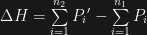
Given a system S having n unbound particles, the heat of the system is equal to \displaystyle \sum\limits_{i=1}^{n}{{{P}_{i}}} , where {{P}_{i}} is the momentum of the {{i}^{nt}} particle and its temperature is \frac{\sum\limits_{i=1}^{n}{{{P}_{i}}}}{Vo{{l}_{S}}}.where Vo{{l}_{S}} is the volume of the system measured in preon(-), the fundamental and discrete particle which forms and dimensionalizes quantum-geometrical space. The total energy of the system being equal to \sum\limits_{i=1}^{n}{{{m}_{i}}c} , it follows that if we define entropy in the classical sense, then the entropy ofS is \sum\limits_{i=1}^{n}{{{m}_{i}}c}-\sum\limits_{i=1}^{n}{{{P}_{i}}}.

Application to Exothermic Reactions within a System

The QGD definitions can be used to describe the changes in heat and temperature resulting from chemical or nuclear reactions. The particles involved are different, as are the reaction mechanisms, and the reactions occur at different scales, but both result in changes in the structure and number of bound particles.

Consider \displaystyle {{S}_{1}}\to {{S}_{2}} where {{S}_{1}} is a dynamic system containing {{n}_{1}} unbound particles (or structures) some of which reacting with each other, and {{S}_{2}} the resulting system containing \displaystyle {{n}_{2}} unbound particles, if {{n}_{2}}>{{n}_{1}} then \displaystyle \sum\limits_{i=1}^{n}{{{P}_{i}}}<\sum\limits_{i=1}^{n}{{{P}_{i}}}' and change in heat of the system is\Delta H=\sum\limits_{i=1}^{{{n}_{2}}}{{{P}_{i}}}'-\sum\limits_{i=1}^{{{n}_{1}}}{{{P}_{i}}} is positive.

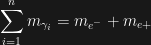
For example, let say the system contains only a particle {{e}^{-}} and a particle {{e}^{+}} which annihilate to give n photons (\gamma ), then \displaystyle \Delta H=\sum\limits_{i=1}^{n}{{{m}_{{{\gamma }_{i}}}}c}-\left( {{v}_{{{e}^{-}}}}{{m}_{{{e}^{-}}}}+{{v}_{{{e}^{+}}}}{{m}_{e+}} \right). Here, the difference in heat depends on the speed of interacting electrons and is at the lowest when electrons achieve the speed of light; in which case \Delta H=0.Note that from the QGD model, when electrons achievec, internal motion stops, so that component preons(+) move in parallel trajectories. Note that QGD predicts that electrons accelerated to cbecome indistinguishable from neutrinos and become electrically neutral. The electrical charge of a particle is caused by internal motion of its component preon(+) which interact with the preonic field (the free preons(+) populating quantum-geometrical space). Since all internal motion stop at speedc, the electron moving at that speed must lose their electric charge.

Also worth nothing is that \displaystyle \sum\limits_{i=1}^{n}{{{m}_{{{\gamma }_{i}}}}}={{m}_{{{e}^{-}}}}+{{m}_{e+}} which implies that {{E}_{{{S}_{1}}}}={{E}_{{{S}_{2}}}} ,that is; mass and energy are conserved. This holds for any closed system. So though it is believe that a nuclear reaction results in the conversion of mass into energy, it is, according to QGD, it results in the freeing of bound particles which carry with them momentum, hence increase the heat of the system. Aside from the reaction mechanism, the only difference between exothermic chemical and nuclear reactions is in the type of particles that become free. For chemical reactions these particles are molecules, atoms and photons, and for nuclear reactions they nuclei and other subatomic particles.

Application to Cosmology

In the initial state of the Universe, QGD theorizes that all preons(+) were free. That means that the energy of the Universe was equal to its heat. So if that its entropy was equal to zero. That is:\displaystyle {{m}_{U}}c-\sum\limits_{i=1}^{n}{{{P}_{i}}}=0, where {{m}_{U}} is the masse of the Universe in preons(+) and since all preons(+) are free {{m}_{U}}=n. It follows that the temperature of Universe in its initial state was T_{0}^{U}=\frac{{{m}_{U}}c}{Vo{{l}_{U}}}.
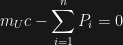
Though the Universe as evolved, its total energy remains {{m}_{U}}c, but as particles and structures are formed its heat decreases resulting in an increase in entropy according. In formal terms we have \displaystyle {{m}_{U}}c-\sum\limits_{i=1}^{n}{\left\| {{P}_{i}} \right\|}>0).

For those interested in reading further, the chapter on cosmology in Introduction to Quantum-Geometry Dynamics explains that the temperature of the Universe in its initial state and to the only two constants of QGD; c the kinetic energy of the preon(+) and k the proportionality constant between the n-gravity and p-gravity, are related by the equation {{T}_{0}}=\frac{c}{\sqrt{k}}.

The next article discusses how gravity emerges from the interactions between preons.

Wednesday, September 26, 2012

Refraction of Light (QGD optics part 2)

In part 1 of QGD Optics, we examined how photons interacting with matter can create the diffraction patterns current physics associates with wave interference. It was shown that this behavior of light can be fully explained using the QGD purely corpuscular model of light.

  1. Photons are singularly corpuscular (so no wave-particle duality necessary)
  2. Photons are composite particles made of preons(+) therefore
  3. Photons have mass and that mass is equal to the number of preons(+) that form it
  4. Space is quantum-geometrical, that is, it has a discrete structure.

Hence, to predict the deflection of the trajectory of a photon, all we need to do is calculate the gravitational interaction between it and whatever matter it interacts with using the formula \displaystyle \underset{b\to a}{\mathop v\left( d \right)}\,=\left\lfloor {{m}_{a}}\frac{\left( k-\frac{{{d}^{2}}+d}{2} \right)}{c}-{{m}_{b}}{{v}_{b}}\cos \left( \theta  \right) \right\rfloor

Where d is the distance, measured in the fundamental unit of preonic leap, between a photon \lambda and a material structure a and {{m}_{\lambda }}and {{m}_{a}}respectively the masses of the photon and the structure measured in preons(+) and k is the proportionality constant between the units of n-gravity and p-gravity; that is {{g}^{+}}=k{{g}^{-}} with k\approx {{10}^{108}}.

Below are a few examples of the application of the formula to refraction of light.

The image above illustrates the path of a single photon. The red circles represent positions of the photon. The green circles represent the radius of gravitational interaction significant enough to affect the trajectory of the photon. The regions highlighted in color represent the regions or parts of the lens the photons gravitationally interacts with. As we can see, the yellow regions are significantly smaller than the purple regions. The yellow regions contain less matter than the purple region, so the gravitational interaction between the photon with and the purple regions is greater than that with the yellow regions and results in a net interaction towards the purple region. The difference in volume, hence mass, of the regions evidently depends on the shape of the lens. The lens in this example is convex, which as we know will bend light towards a focal point.


The next image illustrates the path of a photon in a concave lens.


As one can see, the greater gravitational interaction is with the purple regions which will cause the photon to deviate outwardly from its path.

If in our examples {{m}_{a}} represents the mass of a purple region and {{m}_{b}}, the mass of a yellow region, then the deviation of the photon\lambda is described by:

\displaystyle \underset{\lambda \to x}{\mathop v\left( d \right)}\,=\left\lfloor {{m}_{a}}\frac{\left( k-\frac{{{d}^{2}}+d}{2} \right)}{c}-{{m}_{\lambda }}c\cos \left( \theta  \right) \right\rfloor -\left\lfloor {{m}_{b}}\frac{\left( k-\frac{{{d}^{2}}+d}{2} \right)}{c}-{{m}_{\lambda }}c\cos \left( \theta  \right) \right\rfloor

or

\displaystyle \underset{\lambda \to x}{\mathop v\left( d \right)}\,=\left\lfloor \frac{{{m}_{a}}-{{m}_{b}}\left( k-\frac{{{d}^{2}}+d}{2} \right)}{c} \right\rfloor

If the value is positive, then the photon will be deviated toward the purple regions and x=a. If the value is negative, then it will be deviated towards the yellow region and x=b.

As one can see from the given above and in part 1, QGD provides not only mathematical description of optical effects but a physical explanation. In the case of refraction, QGD optics show that the changes in trajectory of light passing through a lens depend on its geometry which in turn affect the shapes and volumes (hence masses) of the regions photons interact with.

In the above examples, we examined the refractions of a photon of arbitrary mass. But, as the equation indicates, the degree of refraction is also a function of the photon’s mass. Photons having different masses will be refracted differently. Everything else being equal, the more massive the photon, the greater the change in trajectory will be. This is why white light can be separated into photons of different colors. For example, since blue photons are deviated more than red or yellow photons, then red photons must be more massive than either red or yellow photons. And since photons in QGD are singularly corpuscular, this implies that photons of have different colors because they have different masses. Color depends on mass, not frequency.


 In part 3 of this series of article we will discuss the reflection of light and the photoelectric effect and how the two are closely are related.

Thursday, May 3, 2012

Icarus Measures Superluminal Neutrinos

Recently someone posted a reply to a comment I made on October first 2011 in which I indicated that the OPERA results, which suggested that neutrinos can travel at the speed of light, were in agreement with prediction I made in 2010 in my Introduction to Quantum-Geometry Dynamics.

The poster replied:

Sadly, as we now know, OPERA’s measurement apparatus were faulty and the neutrinos were not superluminal, as Cohen and Glashow so powerfully argued.”

An even stronger argument against QGD’s prediction of superluminal neutrinos is the recently released Icarus results which provides strong evidence that neutrinos travel at the speed of light. The Icarus group arrived at this conclusion after studying the data for seven neutrinos detected in November 2011.

Though it is true that the Icarus results refutes the Opera results, they support the Opera group’s initial conclusion that neutrinos travelled at superluminal speed. Hence, the Icarus are in agreement with QGD’s predictions (and so does Opera’s data after being corrected to take systematic errors in consideration).

You may ask yourself: How can the Icarus results support the possibility of superluminal neutrinos when they clearly indicate that neutrinos travel at the speed of light?

First, it’s important to know that QGD didn’t predict that neutrinos could travel faster than the speed of light. What QGD actually predicted is that the relative speed of neutrinos can exceed the speed of light. To understand the nuance we need to discuss the QGD’s model of space.

QGD suggest that space is quantum-geometrical and emergent. In other words, according to QGD, space is generated by the repulsion force between preons(-); one of only two fundamental particles admitted by the model. Unlike the model of continuous space implied by all physics theory, quantum-geometrical space has structure. Particles at the fundamental scale of reality move by leaping between ‘quanta’ of space (see opening chapters of Introduction to Quantum-Geometry Dynamics).

Using the quantum-geometrical model of space, QGD defines two kinds of speed. The first, which we call absolute speed, is the fundamental speed; the speed at which an object moves within the quantum-geometrical space. The second type of speed, which is the speed that all physics experiments measure, is the speed of an object relative to another object or relative speed. Experiments such at the Icarus can only measure the relative speed of neutrinos. That speed corresponds the speed of neutrinos relative to their target at the Gran Sasso laboratories (for detail explanation see this article).

The Icarus results (download their paper here) shows that they calculated the speed of 7 neutrinos. Their data indicates that three neutrinos travelled at speed lower than the speed of light, one neutrino travelled at the speed of light and three neutrinos travelled at faster than the speed of light. The slowest neutrino arrive 18 nanoseconds later than light would have along the distance that separated their source from their target. The fastest neutrinos arrived 19 nanosecond faster.

Now, according to the model of neutrinos that is consistent with quantum-geometrical space, neutrinos can only travel at the speed of light. According to the model, the speed of neutrinos, like that of photons, is independent of their energy.

Considering that the speed of neutrinos is the speed of light and after taking into account the actual margins of error of the measurements, it follows that the variations relative speeds of the seven neutrinos observed by the Icarus group is consistent with the variations in the relative speeds attributable to the motion of the Earth along the axis that connects the source of the neutrinos at CERN with their target in Gran Sasso (this is explained in detail a previous article).

The variations found in the relative speed of neutrinos in experiments such as the Opera and the Icarus, are much more revealing than it appears. Not only do they provide a different way to evaluate the speed of light (given a large enough sample, the average of the relative speeds of neutrinos approaches the speed of light), but they provide a means to indirectly measure the absolute speed of the Earth.

In conclusion, though it is true the Icarus data refute the neutrinos speed measurements of the Opera experiment, the variations in the relative speed of neutrinos between the two experiments are consistent which each other and consistent with QGD’s predictions.

A Prediction for the Upcoming Measurements of the Speed of Neutrinos

This month, several research groups, including OPERA and Icarus, will conducts new experiments that aim to measure the speed of neutrinos. In addition to the predictions already made, I would like to add the following:

If a group of neutrinos are detected in a short time interval, even if detected by different experiments, they will be found to have the same relative speed. If confirmed, this prediction would support the QGD interpretation that the difference between the speed of light and the relative speed of neutrinos is attributable to absolute motion of the Earth along the axis that connects the source of neutrinos at CERN and their target at Grand Sassol; the variations in the relative speeds neutrinos being themselves caused by the motion in quantum-geometrical space of the axis between CERN and Grand Sasso.

Thursday, December 22, 2011

A Physics Theory is Required to do Three Things: describe, explain and predict (part 3)

Note to readers: Part 1 and part 2 are necessary prerequisites for understanding this article.

QGD Cosmology

Though quantum-geometry dynamics is a physics of fundamental reality, its axioms imply a number of predictions at the cosmological scale. If, as QGD proposes, space is discrete and emerges from the interactions between preons(-) and if the single fundamental component of matter is the preon(+), then the formation of all material structures, from particles to galaxies requires that the Universe evolved from an isotropic state where all preons(+) were free and uniformly distributed through the entire quantum-geometrical space of Universe. Before I move on, I would like to warn the reader that much of QGD contradicts the dominant theory of the origin and evolution of the Universe, but none of it, as far as I know, contradicts observations. In fact, not only does QGD cosmology not contradict observations that support the dominant theory, but it also accounts for observations that the dominant theory cannot explain and which constitutes strong counter-evidence against it. As we will see, QGD cosmology proposes that ours is a locally condensing universe rather than an expanding universe. A locally condensing universe, as defined below, is nearly undistinguishable from an expanding universe. From an observer’s point of view, the galaxies of both types of universe will appear to recede from each other at an accelerated rate. But QGD not only agrees with all observations that support the Big Bang theory, it also agrees with the observations of redshift anomalies, which is strong counter-evidence against the Big Bang theory. QGD not only describes and explains, but predicts the conditions that will produce redshift anomalies.

The Material and Spatial Dimensions of the Universe

When we think of the Universe, we think of what we observe through telescopes. We think of planets, stars, galaxies, galaxy clusters; the material structures of the Universe. When we study the Universe, we do so by observing the material structures, but not the entire Universe is observable. We can only observe what is made of matter because only matter can interact with the instruments we use for observation. Yet the Universe is made of more than structures of matter; it is also made of space. And if QGD is correct, that space is quantum-geometrical. Virtually all of physics considers space to be an amorphous expanse in which physical systems exist and interact. As a consequence all physics theories are theories of matter (or matter and energy to be precise). Quantum-geometry dynamics too is a theory of matter, but it is also a theory of space. Also, according to QGD, not only is space quantum-geometrical and emergent, it also determines the very structure of matter.

Conservation of Space

QGD proposes that it be the repulsive force of n-gravity acting between preons(-) that generates space (n-gravity being the fundamental force intrinsic to preons(-)). Since preons(-) are fundamental particles, they obey the law of conservation which states that nothing fundamental can be created or destroyed. It follows that there must be a finite number of preons(-), which in turn implies that there is a finite number of interactions, thus a finite amount of quantum-geometrical space. Therefore, as large as it appears to be, space must be finite.

Particle Formation and Strict Causality

QGD follows the principle of strict causality, which is short for saying that the formation of any non-fundamental physical object requires the pre-existence of its constituents. Fundamental objects, being fundamental, pre-exist everything else (post-exist everything else as well). The strict causality implies that any structure requires the pre-existence of its components may appear trivial, but it is a principle that some theories feel is fine to violate. Other theories, such as string theory, can’t tell which particles may be components of which other particles (see Leonard Susskind’s lectures of reductionism
here
). As a result, theories that violate strict causality may ambiguously indicate that reality can get more complex the closer we approach the fundamental scale. There is no such ambiguity in quantum-geometry dynamics. Strict causality implies that reality get simpler at the fundamental scale. QGD predicts the existence of only two fundamental particles and two fundamental forces. Reality can’t get any simpler. QGD shows that all laws of physics can be derived from a simple of set of axioms which is complete and consistent. This, of course, contradicts Gödel’s incompleteness theorem. But if the Universe is made of a finite set of fundamental particles which combine in accordance to a finite set of fundamental laws to produce physical reality, then it follows that Gödel’s first incompleteness theorem is, at least in its present form, wrong. Also, if you believe that the fundamental components and laws are a consistent and that the Universe is a coherent system, then Gödel’s second incompleteness theorem must also be wrong. It follows the Universe is found to be complete and consistent system, then Gödel must be revised and Hilbert’s program must be reinstated. An acquaintance once commented that we should make a distinction between a mathematical demonstration and a physical demonstration. My take on the question is that it makes no difference. If the Universe is found to be both coherent and complete (that is, fundamental particles and the laws that govern them are consistent and all that they produce remains part of the Universe (completeness), then all physical processes are emergent from the axiomatic set of fundamental particles and laws. Now, that means that not only are the basic physical interactions emergent, but all processes, including environmental, social, cultural and neurological processes emerge from the fundamental axiomatic set. One can argue that, as abstract mathematics may be from reality, they are the result of mental processes, which are necessarily physical so that they, themselves, can be derived from the fundamental laws of physics. In that context, it doesn’t matter what the construct is (a painting, a film, a poem or a mathematical theory), it must be emergent and can theoretically be derived from the fundamental axiomatic set.

The Cosmic Microwave Background Radiation

Quantum-geometry dynamics describes the initial state of the Universe as being one in which preons(+) were free and distributed uniformly throughout the quantum-geometrical space. Following this initial state, the simple structures we call photons started to form. The formation of photons happened throughout the Universe uniformly and resulted in the cosmic microwave background. The density of the preonic field being greater than it is now, the photons produced were more massive (see mass/energy equation in Introduction to Quantum-Geometry Dynamics). Most preons(+) are still free today and still form photons (though at the lower rate). The collective gravitational effect of those free preons(+) have been observed and correspond to what has been called dark matter.

Small Structure Formation

The strict causality principle, which requires the pre-existence of a structure’s components, implies that photons combined to form the electrons, positrons and neutrinos. In fact, the well-known electron-positron annihilation is simply the reverse of the mechanism of particle formation. This is explained in the book.

Large Structures

The formation of large structures also follows the principle of strict causality. It implies the formation of larger particles, then nuclides (the components of the atomic nucleus) then light atoms. These eventually formed stars and galaxies. The formation of increasingly massive structures (elements) continued in stars where the gravitational interactions are sufficient fusion of elements. It has also been observed that particles, nuclides in particular, have certain sizes. The lower and higher boundaries on the size of any particle determine the island of stability. The mechanisms which limit the size of a particle are explained in chapter titled Nucleus Size and Formation of the book. This chapter explains the notion of equilibrium and how only particles that are within the range of equilibrium are stable and why particles that are lighter or heavier will decay.

Locally Condensing Universe

This is one the most distinctive aspect of the QGD cosmology. If follows from the axioms of QGD that the size of the Universe, defined as the space emerging from the interactions between preons(-) is constant, but within that space massive structures will gradually collapse towards their center. To the observer, a locally condensing universe is nearly indistinguishable from an expanding universe. For instance, the distance between galaxies progressively increases in both locally condensing universe (LCU) and expanding universe (EU). And in both the rates at which the galaxies retract from each other increases, which indicates that galaxies retract at accelerated rate in both the LCU and EU. So if both LCU and EU are nearly indistinguishable to the observer, how do we know which is correct? Is there any evidence which would support LCU? The observational evidence exists and has been known from some time as redshift anomalies. The redshift is simply the shift of the frequency of light coming from a moving source (which is understood to be analogous to the Doppler Effect for sound). The faster the relative speed of the source of light away from the Earth, the greater the redshift of the light coming from that source. The magnitude of the redshift is used to calculate the distance between galaxies and the rate at which they recede from each other. Hence it is used to infer the expansion of the Universe. According to the Big Bang theory, which is the dominant theory of the expanding universe, the further away galaxies are, the faster they will recede from us. This implies that neighboring cosmic structures (galaxies, quasars, etc.) would recede from us at the same rate, thus have the same redshift. This is generally true, but there are an increasing number of observations that show neighboring cosmic structures having significant differences in their redshifts. This would indicate that the rate at which they recede from us differs by many orders of magnitude. Redshift anomalies (and there are now thousands of them) are in direct opposition with the Big Bang and other expanding universe theories. Yet, redshift anomalies support the idea of a locally condensing universe. Not only do redshift anomalies support QGD cosmology, they are predicted by QCD cosmology. Redshift, according to QGD, is not a measure of the rate at which they galaxies recede, but the rate at which they collapse (which itself is a function of the density of the galaxy or cosmic structure). The acceleration of the rate at which galaxies recede is also consistent with rate at which they would collapse under the gravitational effect described by QGD. The rate of collapse of cosmic structures obeys the QGD law of gravitation which is described by the equation found in chapter 8 of my book. As such it is affected by their mass and density, but also by the gravitational interactions between them. Using the QGD gravitational interaction equation, the rate of collapse between galaxies will be affected by dark energy or dark matter effects depending on the distance between them. The dark energy and dark matter effect will also determine the shapes of the interacting galaxies. Given certain distance exceeding a certain a value (see part 1 and part 2), n-gravity will be dominant (the dark energy effect) resulting in a flattening of the galaxies along the axis that connects them. While at distances lower than the equilibrium point, p-gravity becomes dominant (the dark matter effect) and the shape galaxies will expand along the axis connecting them. The same principle explains why the material universe (that part of the universe where matter is concentrated) is nearly flat (something that the Big Bang and EU theories can’t explain). Thus the universe should become flatter as it evolves.

Universe as a Finite and Closed Structure

We mentioned earlier that the quantum-geometrical space must be finite. If QGD is correct, it must also be closed. That is, a photon going in a straight trajectory would eventually go forth to its point of origin, whichever point we arbitrarily chose as origin. So though the Universe may be finite, there would be no edge to it.

Summary of QGD Cosmology Predictions

  • The Universe evolved from an isotropic state. This eliminates all problems associated with singularities.
  • The Universe is a finite and closed system. This eliminates all problems associated with infinities.
  • The Universe in strictly causal

Consequences for Particle Physics

Particle accelerators, such as CERN’s large hadron collider, are extraordinary tools that attempt to recreate on a microscopic scale the conditions that prevailed at the beginning of the Universe. The hope is that by recreating the conditions immediately following the Big Bang will reveal the fundamental particles and states that existed at the very beginning of the Universe. This is a valid approach if the Big Bang theory’s assumption that the Universe evolved from a singularity is correct. But what if, as QGD suggest, the Universe evolved from an isotropic state? If such is the case, then the conditions recreated in particle colliders are not those that prevailed at the beginning of the Universe, but conditions we could expect to be found much later and only in dense preonic structures such as those existing prior to the formation of starts. Thus, particles colliders do not reveal fundamental reality, but an emergent reality. In other words, trying to discover fundamental reality using particle accelerator is like looking at the wrong end of microscope to reveal the microcosm or at the wrong end of a telescope to observe the macrocosm. That is not to say that such instruments as the LHC are useless. On the contrary, such instruments are essential to our understanding of reality. It’s only that what they show us is not fundamental reality, but processes that came into existence at states that followed the initial isotropic state of the Universe.

Sunday, December 11, 2011

A Friendly Wager about Superluminal Neutrinos

Or How Our Two Cents May Be Worth 10,000 Times More

Suggested prior reading: Why Can’t Anything Move Faster Than Light?

I’ve been following the well written and often thought provoking blog of Johannes Koelman. One of his articles titled Einstein On Steroids: Dirac, The Higgs, And Speeding Neutrinos in which he discusses some of possible implications of the OPERA results (which appear to show that neutrinos can violate the speed of light limit imposed by special relativity) caught my attention.

In his interesting and entertaining article (which you should definitely read if only as an example of the sociology of science), Johannes suggests that no theoretical physicists would bet in favor of the confirmation of the OPERA results while there would be plenty of them that would bet against it (the results are overwhelmingly dismissed as being an experimental error).

Now, having predicted the possibility of relative superluminal particles (absolute speed cannot exceed the speed of light), specifically that relative superluminal photons and neutrinos. Both particles share some characteristics which allows them to move at relative speed in excess of c but with actual intrinsic speed equal to c. I confidently responded that I would take the bet.

As readers of this blog (see here and here) and Introduction to Quantum-Geometry Dynamics know, I believe that the speed in excess of the speed of light corresponds to speed of the Earth relative to the quantum-geometrical background along the axis connecting CERN to Gran Sasso.

I was pleasantly surprised that, like me, Johannes was willing to put his money where his “blogging mouth” is. So after exchanging a few email we agreed to the terms of a bet. You can read them on his blog appropriately titled Putting My Money Were My Mouth Is.

Of course, neither of us are doing this for the money (though $200 can buy an outing in a pretty decent restaurant and I love restaurants), but mainly as a way to stimulate discussions and awareness of the very fundamental question the OPERA group poses to physics.

I think this could be a lot of fun.

Monday, November 21, 2011

A Physics Theory is Required to do Three Things: describe, explain and predict (part 2)

Note to readers: reading of part 1 is a prerequisite for a full understanding of the following

As explained in part 1 of this article, quantum-geometry dynamics explores the consequences of space being

  1. Discrete

    and

  2. emerging from the interactions between preons(-).


Preons(-), according to quantum-geometry dynamics, are fundamental particles that dimensionalize and determine the discrete nature of quantum-geometrical space which, in turn, dictates the structure of matter, itself composed of the preons(+) (the only other fundamental particle of QGD).

QGD, which follows from the axiom of discreteness of space, forces us to rethink some assumptions we have come to make about physical reality; even basic notions such as that of mass, energy, momentum come into question. As is discussed in detail in Introduction to Quantum-Geometry Dynamics, choosing the axiom of discreteness of space instead of that of continuity of space has profound consequences for all of physics. Virtually all physics theory assume that space is continuous, so it’s not surprising that a physics based on discreteness of space provides descriptions of physical systems that are radically different from continuity-based theories.

Letting go of foundational concepts is difficult, especially for professional physicists. This is understandable since these foundational concepts are the basis of relatively successful theories reinforced by years, often decades, of study, research and models which are often supported by experimental data.

It is also understandable that physicists will evaluate new ideas from within the framework of the theories they use to make sense of reality. Yet a new theory doesn’t need the validation of other even well established and tested theories any more than nature requires science to exist. A theory is required to do three things; describe, explain and predict. Nothing more. Nothing less.

So my advice to all readers is to study QGD for itself and outside the framework of any other theory and to check it for internal consistency and most importantly for consistency with physical reality. The validity of a theory cannot be determined by any theory built of a different axiom set. Theories issued from different axiom sets are mathematically bound to disagree. Thus the validity of a theory can only be determined by observation and experimentation.

The real test of a theory is not how well or elegantly it describes and explains physical systems. The real and only valid test of a theory is in its capacity to make original and testable predictions. We will discuss now QGD predictions relating to fundamental forces and effects, but before we do so, we will go over some basic concepts.

Some Basic concepts of QGD

Mass and energy are fundamental and intrinsic properties of preons(+), the fundamental particles of matter.

Mass is the property of preons(+) that manifests itself in gravity, which according to QGD is a composite effect of p-gravity (the fundamental force intrinsic to preons(+), and n-gravity (the fundamental force intrinsic to preons(-)), the particles which dimensionalize space. Since preons(+) are fundamental, their mass is the fundamental unit of mass . It follows that the mass of an object, or m, is simply the numbers of preons(+) it contains.

The fundamental unit of energy is the energy of a preon(+). The energy of a preon(+) is that which allows it to leap from one preon(-) to the next on its path, which is the fundamental speed of c. So the energy of a preon(+) is simply its mass multiplied by c that is; 1 * c or simply c.

It follows that the energy of an object is equal to the number the number of preons(+) it contains times c. Thus, as the reader can see, E=mc, naturally follows from the axioms of quantum-geometry dynamics.

That said, it is important to know that E=mc does not describe an equivalence between mass and energy. Mass and energy are two intrinsic and fundamental properties of the preon(+). According to QGD, mass cannot be converted into energy or energy into mass. It follows that what is released during a nuclear reaction is not energy but particles which carry momentum (for a detailed explanation see chapters 8, 9 and 10 of Introduction to Quantum-Geometry Dynamics). The total mass and energy of a system doesn’t change, but absolute value of the momentums of the particles that composes it does.

Fundamental Forces

One of the main problems with which physicists have been struggling is to develop a theory that can unify quantum mechanics and relativity. A number of candidate theories have emerged over the years; all of which have failed. To be clear, QGD is not a grand unified theory; quite the opposite. QGD shows is that unification of quantum mechanics and general relativity is impossible to achieve.

QGD explains that a grand unified theory is unachievable because the axiom sets of the theories it tries to unify are not only axiomatically incompatible, they are mutually exclusive. That is, there is no way using current theories to develop a complete theory that can explain the four known forces that are the strong and weak nuclear interactions, the electromagnetic force and gravity.

Furthermore, QGD concludes that the main reason the four forces can’t be unified under one theory is that that none of them are fundamental forces. In other words, the strong and weak nuclear interactions, the electromagnetic force and gravity are either composite forces or a combination of composite forces and effects.

QGD predicts the existence of only two fundamental forces, n-gravity and p-gravity, respectively associated with its two fundamental particles, the preons(-) and the preons(+). From the equation that describes their combined effect between any two objects, we can derive solutions that correspond to the strong and the weak nuclear interactions, the electromagnetic effect and gravity. The equation describing the combined effects of n-gravity and p-gravity is:


Strong Nuclear Force

Gravity

Dark Energy

Electromagnetism

The electromagnetic interaction is a consequence of two effects. The first is the gravitational interaction described by the QGD equation above.

The second effect is a mechanism resulting from the interactions between electrically charged objects and the preonic field (the free preons(+) in quantum-geometrical space) which in proximity to charged particles becomes polarized. The changes in directions and speed of objects submitted to an electromagnetic force is here caused by the exchanges of preons(+) between objects and the preonic field. When objects acquire preons(+) from the preonic field, it takes on their momentums. This affects the net sum of momentums of the objects.

The Weak Interaction

The weak interaction is caused by the strong gravitational and electromagnetic interactions within nuclei and particles. Weak interactions cause decay when the mass of particles lies outside their island of stability (chapters 8 to 14). Different mechanisms individually or in combination are responsible for all forms of particle decay; the three forms of radioactive decay as well as the observed decay of all composite particles, which according to QGD includes all particles observed in high energy physics experiments.

QGD thus predicts that particle decay is not a probabilistic event, but obeys a strict causality principle (chapter 9; events and causality).

For a detailed explanation of the mechanisms of weak interactions please read the relevant chapters of Introduction to Quantum-Geometry Dynamics.

Dark Matter

The cosmology derived from the axioms of QGD predicts that most of the preons(+) in the Universe are still free and exist in the form of the preonic field. So though individual preons(+) interact weakly, sufficiently large regions of the preonic field interact with massive objects as if they were large physical objects themselves. Solutions of the QGD equation which take into account the preonic field describe the effect we know as dark matter.

Speed of Gravity

An important prediction, resulting from QGD’s model of quantum-geometrical space is that n-gravity and p-gravity are fundamental interactions and that gravity does not propagate at the speed of light, as is predicted by relativity, but is instantaneous.

To take a classic example; if the Sun were to suddenly disappear, according to general relativity, it would take 8 minutes (the time is takes for light to travel from the sun to the Earth) for the Earth to feel the effect. But according to quantum-geometry dynamics, we would feel the effect instantly.

This would explain the failure of all attempts to detect gravitational waves which should exists if gravity propagates as general relativity predicts.

Summary of QGD Predictions:

To conclude, below is a summary of the QGD predictions found in this second part of this series.

  • There are only two fundamental particles; the preon(-) and the preon(+)
  • There are only two fundamental forces; n-gravity and p-gravity
  • Space is discrete and emerges from the n-gravity interactions between preons(-)
  • Matter is made of bound preons(+), this includes all particles thought to be elementary
  • Dark matter is made of the free preons(+) which form the preonic field
  • Dark energy is an effect which is observed when the n-gravity component of the QGD gravitational equation exceeds the p-gravity component.
  • Gravity is instantaneous

In part 3 of this series, we will discuss the cosmological predictions of QGD.

Please Read the post "Where to Start"

Where to Start

  Quantum-Geometry Dynamics  has progressed considerably since it was first introduced 15 years ago. As my understanding of the implications...